Experimental Photography
A 28-day course in new perspectives ~ begins 13 October 2026
Registration closes in
When was the last time you saw something for the first time?
Images carry meaning. In the age of social media and AI, it’s easy to get lost in the sea of highly-curated grids and numbed by the piles of computer-generated slop.
Today, nearly everyone brings a camera with them wherever they go. But the focus is often on the screen, not the world. It’s time to reclaim image making as a way of seeing ~ and use our cameras as tools to engage with our environments, open our imaginations, and share new perspectives.
Photography has a dense and complex history and it’s given us a tool for attention, representation, play, reflection, and documentation. The development of the commercially manufactured camera in the 1830s changed art and shaped societies. It’s a significant tool of a long chain of technologies that have influenced how we engage with ourselves, each other, and the world.
See differently
Experimental Photography explores ways of using image to understand and explore your relationship to yourself and the world. It’s an invitation to celebrate and experience photography as an experiential art ~ and to make it your own.
Over 28 days (4 weeks), you’ll use your camera to explore subject matter, light, shadow, texture, and space. You’ll discover your everyday surroundings with new eyes, work with your imagination, and create photos that share your unique perspective with others. Bring you phone with a working camera or your favourite camera.
Experimental Photography is a method to sharpen your attention and deepen your perception. It’s a space to ask ~ What do you notice? What happens when you look again? What do you see that no one else does?
What’s in the course
Be guided as you develop a body of work. You’ll get:
🔹 28 daily photo prompts by email and in the course portal to experiment with over the 4 weeks and beyond
🔹 4 weekly creative lessons to guide your explorations
🔹 4 weekly reflections to help you slow down and widen your perception
🔹 4 art history lessons to deepen your knowledge and apply themes to your practice
🔹 Space to share and discuss your work with others in our WhatsApp community
🔹 A live call with a chance to discuss your work and get feedback
By the end of the course, you’ll:
🔸 Start without knowing what you will find, and get comfortable working with uncertainty.
🔸 Let go of trying to take a ‘perfect’ photograph, and instead explore the surprises that show up when you follow your attention.
🔸 Stop asking permission to see things your own way.
🔸 Develop a personal visual vocabulary and a body of images that could only have come from you.
Begins on Tuesday, 13 October 2026
Who this is for
The course is a good fit if:
✅ You’re curious about a more spontaneous, less self-conscious creative practice
✅ You want to explore experimental approaches to photography and go beyond technique, rules, and the pursuit of the ‘perfect’ shot
✅ You’re rebuilding a creative life after years spent somewhere else: a career, a role, a version of yourself that didn’t leave much room for experimentation
✅ You take photos every day on your phone, and you want them to mean something again
When this isn’t right:
❌ You are looking for a technical photography course. You will not learn camera settings, composition rules, lighting technique, or editing software in this program. Those lessons can be found elsewhere.
Why this matters now
As AI image generation gets more sophisticated, I find myself more drawn to the photograph as a work of attention and a tool for creative play. This course is built on that same desire: to use the camera as a way of engaging with life, of being a real person in the real world.
The case for photography as a practice of attention:
Photographing on autopilot weakens memory, but photographing with focused attention, such as zooming in on a detail, removes that effect (Henkel, 2014)
People who choose what to photograph recognize more of what they saw, including things they didn't photograph (Barasch, Diehl, Silverman and Zauberman, 2017)
Taking one intentional photo a day for three weeks measurably increased positive mood (Chen, Mark and Ali, 2016)
What you’ll get
Receive 4 weeks of guidance in experimental photography ~ 28 exercises, 4 creative lessons, 4 art history lessons, and 4 reflections. Share work, get feedback, and discuss your creative process with the community in our WhatsApp community.
Attend 1 live Zoom session providing a review and discussion of work. The call will be recorded for anyone who can’t attend. Participants must join live to have their work discussed.
What you’ll need
📸 You can complete the course with any phone with a working camera. If you have a different camera that you prefer to use, that also works.
📸 Optional bonus activities: I also recommend planning to purchase one disposable film camera (or use an analog camera of your choice), and plan to have the film developed.
📸 No prior experience needed. Beginners and working artists are all welcome.
About Francesca
I’m Francesca, an artist, guide, and educator. My approach draws from my professional and personal study of the arts, psychotherapy, and altered states.
I teach art as a way of bringing what’s beneath the surface into a visible form, and as a way of seeing and relating directly to the world around you. I’ve been teaching and facilitating in the arts since I was a teenager, and I bring curiosity and encouragement into the studio.
Enroll
Experimental Photography
£150
13 October to 9 November 2026
Experimental Practice Series
Also Join Experimental Drawing
+£100 (Join now and save £50)
17 November to 14 December 2026
Registration closes in
FAQs
Do I need a specific camera?
No. You can complete the course with any phone with a working camera. If you have a different camera that you prefer to use, that also works.
For optional bonus activities, also recommend planning to purchase one disposable film camera during the course (or use an analog camera of your choice), and plan to have the film developed.
I’ve never taken a photography or art course before. Is this for me?
Yes. Bring an open mind.
I’m a skilled / trained / working artist. Is this for me?
Yes. This course is suitable for experienced artists. A few of the exercises may be familiar, while others will likely be new. Either way, you’ll have the chance to broaden your experience.
How is the work reviewed?
The work is not formally assessed. You’ll have a chance to share it with other participants in the WhatsApp community and receive feedback from me on our live call. Anything we discuss is in the spirit of shared process rather than critique.
When is the live session?
We’ll meet on Zoom to review and share work. The session date will be announced soon. It is typically held on a Tuesday at 1pm NYC / 6pm UK / 7pm Madrid time.
What if I miss the live session?
The live session will be recorded. Participants must join live to have their work discussed.
How much time does it take each day?
Most daily exercises take 10 to 30 minutes, though a few invite you to go longer if you’d like. There’s no set min or max time. The point is to show up daily, not to fill a set amount of time. Weekly reflections take another 10 to 30 minutes, and the live call is 60 minutes.
What if I miss a day?
You will have lessons and prompts delivered in your email to reference in the future. Access to the course platform will extend beyond the end of the course.
What if I’m nervous to share my photography work?
Sharing is encouraged, but optional. It’s up to you. If you choose to share, the space will be encouraging and supportive.
Is this art therapy?
No. This is a creative and educational course, not a therapy space. It’s taught by me in my capacity as an artist and educator.
Do you offer scholarships or reduced fee places?
No. The course is priced to be affordable. If it’s too much, it’s not the right time.
What is the refund policy?
The program is non-refundable. The full refund policy is here. If you have any questions, please contact me before joining.
Have a question not answered here?
Please email me: hello@francescasciandra.com. I read and reply personally to all messages.
References
Barasch, A., Diehl, K., Silverman, J. and Zauberman, G. (2017). Photographic Memory: The Effects of Volitional Photo Taking on Memory for Visual and Auditory Aspects of an Experience. Psychological Science, [online] 28(8), pp.1056–1066. doi:https://doi.org/10.1177/0956797617694868.
Chen, Y., Mark, G. and Ali, S. (2016). Promoting Positive Affect through Smartphone Photography. Psychology of Well-Being, 6(1). doi:https://doi.org/10.1186/s13612-016-0044-4.
Henkel, L.A. (2013). Point-and-Shoot memories: The influence of taking photos on memory for a museum tour. Psychological Science, [online] 25(2), pp.396–402. doi:https://doi.org/10.1177/0956797613504438.
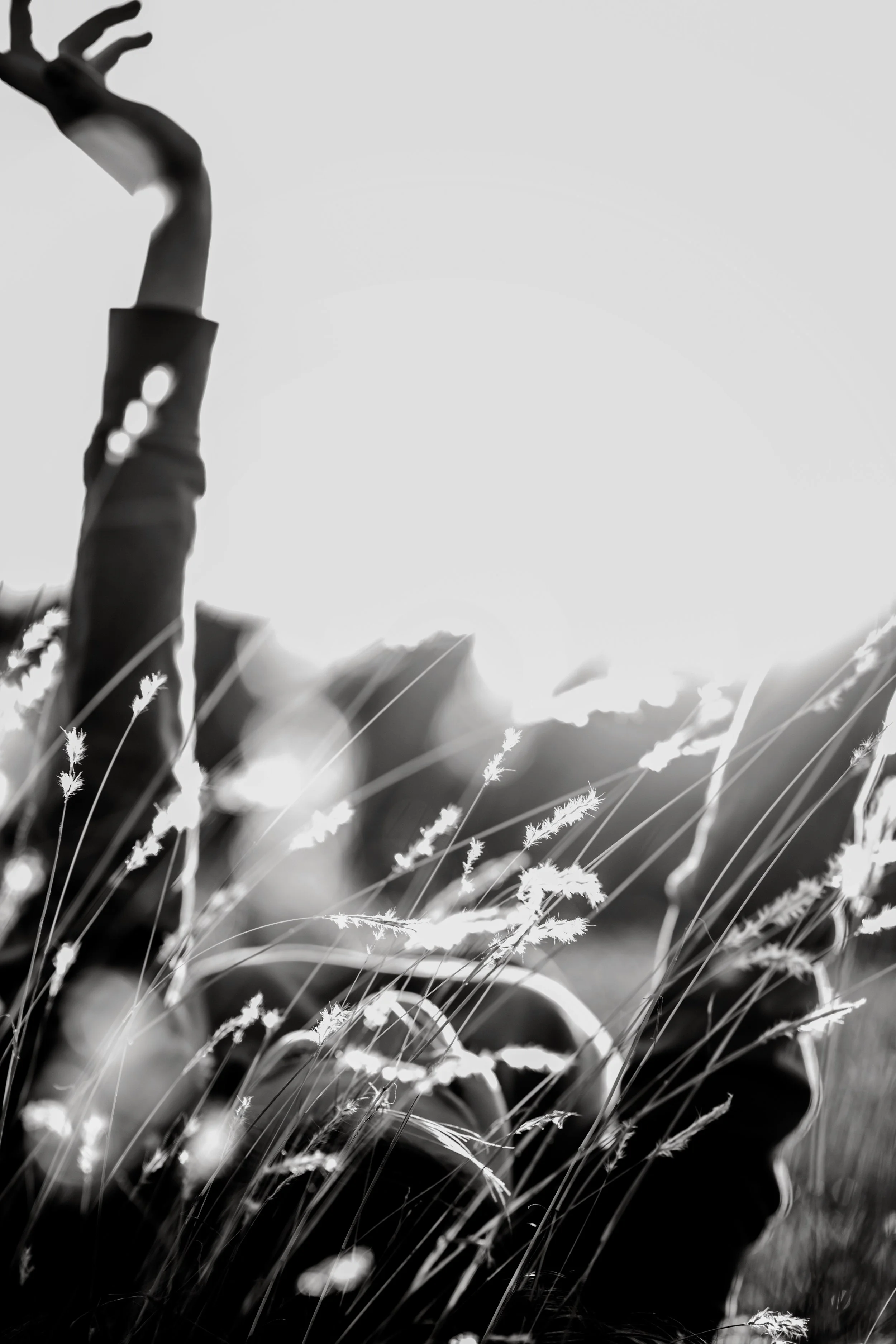
Banner image by Jon Tyson